


We understand these problems are often embarrassing and unpredictable but with the right advice and treatment, many men will see significant improvement.
What is normal bladder function?
Did you know that going to the toilet between 4-7 times a day is normal?
Drinking 6-8 glasses of fluid each day is ideal with a bladder that can store 300-400ml.
Bladder Health is all about you having control!
Signs and symptoms of bladder problems?
- Do you leak when you cough or sneeze?
- Do you find yourself dribbling after you have finished emptying your bladder?
- Do you need to suddenly rush to the toilet with little to no warning?
- Are you only producing a slow stream of wee?
- Are you anxious to leave the house worrying you won’t be able to find a toilet in time?
- Is your prostate affecting your bladder function?
Common causes of bladder problems?
- Ageing – pelvic floor muscles become weaker, your bladder may not contract as well and you may find you have developed new bladder urgency
- Stress or anxiety can affect your bladder function
- Prostate enlargement, which occurs in every male, may cause your flow to be slow, stop and start or cause bladder urgency
- Medical conditions and medications can impact your bladder
- Alcohol, caffeine, artificial sugars and fizzy drinks may also irritate your bladder
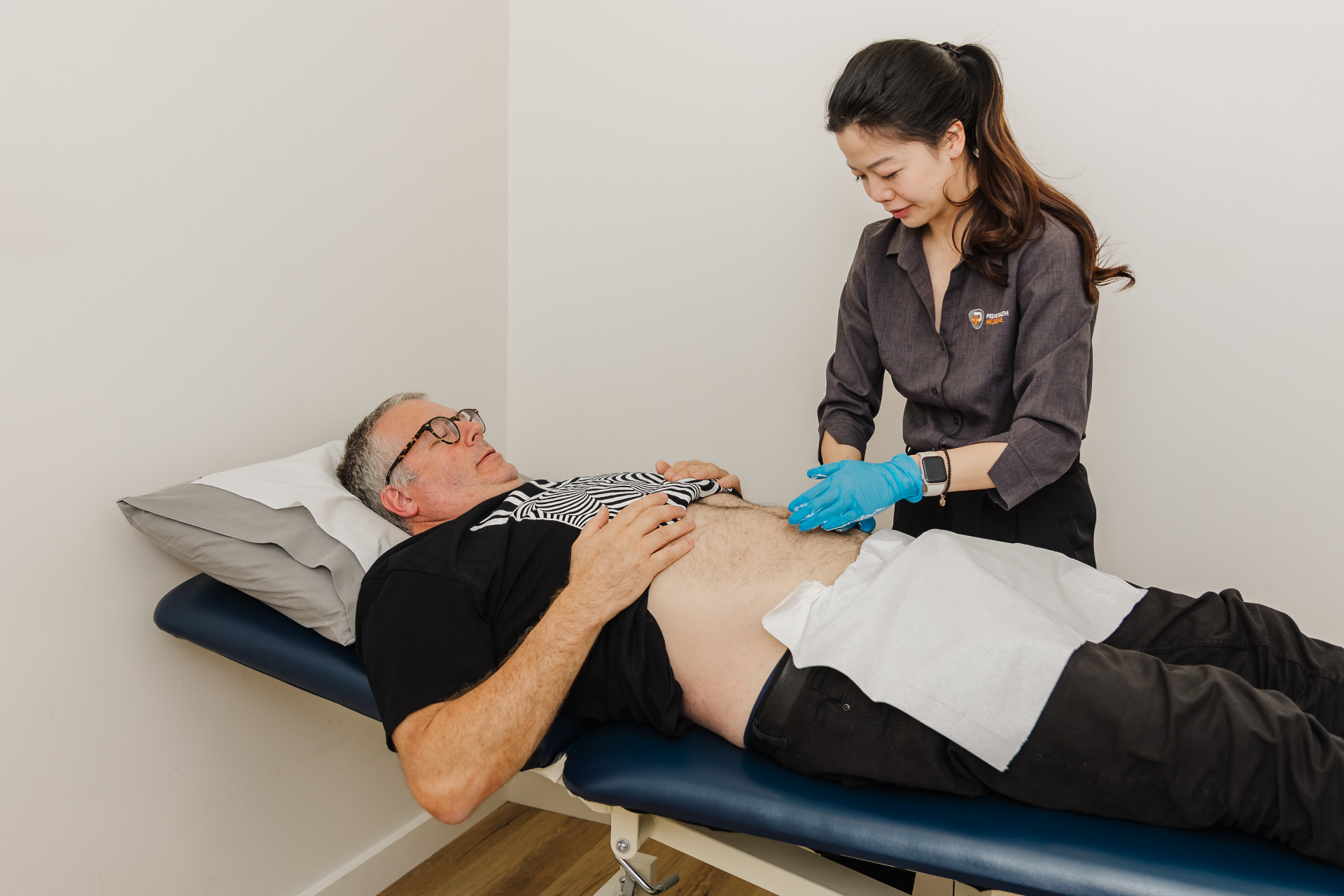
How can we help?
Physiotherapy for bladder problems?
We understand that urinary issues are embarrassing and unpredictable. We focus on your goals and problems to create a personalized treatment plan. This may include:
- Urge delay retraining
- Gradually increasing the storage capacity or size of your bladder
- Increasing the period between visits to the toilet
- Strengthening your pelvic floor muscles so you can hold long enough to reach the toilet in time
Related Blogs

Ever finish urinating and immediately feel like there's still some left? Maybe you find yourself sitting on the toilet for longer, going back for a second wee, or returning to the bathroom shortly after. That feeling of incomplete bladder emptying is common, but it's not something you should automatically ignore. Why might this happen? There are several reasons you might feel like you haven't completely emptied your bladder. Your pelvic floor may not be relaxing properly Your pelvic floor muscles need to relax to allow urine to flow freely. If they're tense or you're unconsciously holding them while trying to wee, the bladder outlet may not open as effectively. This can make it feel like you need to push, wait or try again. You're rushing or hovering Your bladder generally works best when you can sit comfortably, relax and give yourself time to empty. Hovering over the toilet, rushing, or constantly tightening your abdominal or pelvic muscles can make it harder to fully relax. And straining or pushing your urine out isn't usually the answer. Constipation can play a role Your bowel and bladder sit very close together. A full or constipated bowel can put pressure on the bladder and may affect bladder sensation and emptying. You don't necessarily need to be severely constipated for this to have an impact. If you're also experiencing bloating, infrequent bowel movements, hard stools or difficulty fully emptying your bowels, it's worth considering the bowel–bladder connection. Your bladder may be sending confusing signals Sometimes the sensation of incomplete emptying doesn't necessarily mean your bladder is actually full. Bladder irritation, urgency, infection and changes in pelvic floor sensitivity can all affect the way you perceive bladder filling and emptying. This is why the sensation you experience doesn't always tell us exactly what's happening. Should you keep trying to "get the last bit out"? You might find yourself doing a second wee immediately after the first, just to make sure you've completely emptied. Occasionally this is harmless, but repeatedly going back and trying to squeeze out more urine can reinforce the habit of checking your bladder. Instead, try sitting comfortably, relaxing your belly and pelvic floor, and allowing your bladder time to empty without pushing. If you consistently feel unable to empty, however, it's worth getting assessed rather than simply trying harder. When should you get checked? Speak with your GP or pelvic health physiotherapist if you regularly experience: A persistent feeling of incomplete emptying Difficulty starting your urine stream A weak or interrupted stream Needing to strain to urinate Needing to urinate again immediately after finishing Frequent or urgent urination Recurrent urinary tract infections Pain or burning when urinating Difficulty emptying your bladder If you suddenly cannot urinate at all despite having a strong urge, seek urgent medical attention. What can a pelvic health physiotherapist do? Your physiotherapist can look at your bladder habits, bowel function, pelvic floor muscle coordination and how you're actually using your muscles when you urinate. Sometimes the answer isn't to strengthen the pelvic floor — it may be learning how to relax it properly. Treatment may include bladder strategies, pelvic floor relaxation, breathing techniques, bowel management and changes to toileting habits. The Bottom Line Feeling like you haven't fully emptied your bladder doesn't always mean your bladder is the problem. Your pelvic floor, bowel, toileting habits and bladder sensitivity can all play a role. If you're regularly finishing a wee and thinking, "I still need to go," don't just keep pushing or making endless trips back to the toilet. Understanding why you're getting that sensation is the first step towards finding a solution.
Prostate surgery can affect the muscles, nerves and structures that help control your bladder. Urinary leakage is very common in the early weeks and months after surgery, and some men also experience urgency, changes in bladder sensation or sexual difficulties. The good news is that bladder control usually improves significantly with time and the right rehabilitation. Pelvic floor physiotherapy can play an important role in recovery. Why does prostate surgery affect bladder control? The impact depends on the type of surgery and which structures are affected or preserved. Radical prostatectomy During a radical prostatectomy, the prostate is removed. This can affect: · The bladder neck: This normally contributes to urinary control. In some surgeries, it can be preserved. · The external urethral sphincter: After prostate removal, this becomes particularly important for keeping urine in. · The pelvic floor muscles: These muscles support the urethra and help with bladder control. They can become weak, poorly coordinated or, in some cases, overly tight. · Nerves: Nerves involved in bladder and sexual function can be affected during surgery and may take months or longer to recover. · Urethral support: Removing the prostate changes the anatomy and the way the bladder and urethra work together. Surgery for an enlarged prostate (BPH) Procedures such as TURP and TUIP affect the prostate and bladder neck in different ways. The amount of tissue removed and whether the bladder neck is preserved depends on the procedure used. What can you expect after surgery? The first few months Urinary leakage is very common after prostate surgery, particularly after the catheter is removed. Leakage is often worse with coughing, sneezing, lifting, walking or exercise. You may also notice: · Difficulty activating your pelvic floor muscles · Reduced awareness of bladder fullness · Urgency or increased frequency · Pelvic floor tightness or muscle guarding · Changes in sexual function Recovery over time Recovery is different for everyone, but bladder control generally improves significantly during the first 3–6 months. Some men continue to notice improvements beyond 12 months as the pelvic floor muscles and nerves recover and coordination improves. Factors such as age, pre-existing bladder symptoms, prostate size and muscle strength can influence recovery. You may need pads for a while, but needing a pad in the early stages doesn't mean you'll always need one. How can a pelvic health physiotherapist help? A pelvic health physiotherapist can assess how your pelvic floor is working and develop a rehabilitation program specific to you. This may include: · Checking pelvic floor strength, endurance and coordination · Teaching you how to correctly contract and relax your pelvic floor · Bladder training and strategies for urgency · Improving your breathing and muscle coordination during movement · Addressing pelvic floor tightness or pain · Helping you return to exercise and everyday activities · Working alongside your urologist or medical team if further treatment is needed When should you seek help? Consider seeing a pelvic health physiotherapist if you: · Have urinary leakage after your catheter is removed · Are using pads regularly · Have urgency or frequent urination · Have difficulty emptying your bladder · Experience pelvic pain or tension · Are concerned about sexual function · Feel you're not making progress with your exercises Frequently Asked Questions How soon can I start pelvic floor exercises? Pelvic floor exercises can generally begin after your catheter has been removed, once your surgical team says it is appropriate. Don't perform pelvic floor exercises while your catheter is in place. Will I need pads after prostate surgery? Many men use pads during the first few weeks or months. Leakage usually reduces as the pelvic floor and bladder control mechanisms recover. What if my leakage doesn't improve? If leakage continues despite consistent pelvic floor exercises and bladder training, speak with your urologist. Further treatment options may be available, including surgical options for persistent incontinence. Can pelvic floor physiotherapy help with erectile dysfunction? Pelvic floor rehabilitation may support sexual function after prostate surgery, although erectile difficulties can also be related to nerves and blood flow. Your physiotherapist can work alongside your medical team as part of your recovery. The Bottom Line Prostate surgery can temporarily disrupt the muscles and structures responsible for bladder control, but leakage is not something you simply have to put up with. Recovery takes time, and everyone's journey is different. The right pelvic floor exercises, bladder strategies and individualised rehabilitation can help you regain bladder control and confidence after prostate surgery. You don't have to manage it alone. Our pelvic health physiotherapists can assess what's happening, make sure you're doing the right exercises for your body and help you work towards getting back to the things you enjoy.

When you hear the words "pelvic floor," what comes to mind? For many people, it's pregnancy, childbirth or women's health. But here's something that surprises many of our male patients: Men have a pelvic floor too. And when these muscles aren't working as they should, they can contribute to a wide range of symptoms that are often overlooked, misdiagnosed or simply accepted as "part of getting older." The good news? Many pelvic floor issues are treatable, and you don't have to live with them. What is the pelvic floor? The pelvic floor is a group of muscles that sits at the base of the pelvis like a supportive hammock. In men, these muscles help: support the bladder and bowel control urination and bowel movements contribute to sexual function provide stability for the pelvis and lower back coordinate with your breathing and core muscles. Like any other muscle group, they can become weak, overactive, poorly coordinated or painful. 1. You're going to the toilet "just in case" Do you find yourself using the toilet before leaving the house, before meetings or whenever you see a bathroom—even when you don't really need to go? While this habit can seem harmless, it may contribute to bladder urgency over time. If you're frequently: rushing to the toilet needing to urinate often waking multiple times overnight struggling to hold on, your pelvic floor and bladder coordination may be worth assessing. 2. You leak urine Bladder leakage isn't just a women's issue. Some men notice leakage: after prostate surgery during exercise when coughing or sneezing after they've finished urinating (post-void dribbling) without warning. Many men are embarrassed to bring this up, but it's a common reason to see a pelvic floor physiotherapist. 3. You have ongoing pelvic pain Pain in the pelvis isn't always coming from the prostate. Persistent pain may be felt in the: perineum (between the scrotum and anus) tailbone lower abdomen groin penis testicles hips. In some men, overactive or sensitive pelvic floor muscles contribute to these symptoms. 4. You struggle to empty your bowels Your pelvic floor muscles need to relax for a bowel motion to pass comfortably. If they don't coordinate well, you may experience: constipation straining incomplete emptying prolonged time on the toilet. Improving pelvic floor coordination can be an important part of managing bowel symptoms. 5. Sitting is uncomfortable Does sitting for long periods increase your discomfort? Persistent aching around the tailbone, deep pelvis or perineum may be related to several different conditions, including pelvic floor dysfunction. A comprehensive assessment can help identify contributing factors. 6. Sex has become painful—or isn't functioning the way it used to The pelvic floor also plays an important role in sexual health. Pelvic floor dysfunction may contribute to: pain during or after ejaculation erectile dysfunction in some cases reduced confidence pelvic muscle tension during intimacy. Because sexual function can be influenced by many factors—including cardiovascular health, hormones, medications and psychological wellbeing—it's important to have a thorough assessment to understand what's contributing to your symptoms. 7. You've had prostate surgery Pelvic floor physiotherapy is commonly recommended before and after prostate surgery. Treatment may help improve: bladder control confidence returning to activity pelvic floor muscle coordination recovery following surgery. If you're preparing for prostate surgery, seeing a pelvic floor physiotherapist beforehand can help you learn the correct exercises and what to expect during recovery. It's not always about weakness One of the biggest misconceptions is that pelvic floor problems are always caused by weak muscles. In reality, some men have pelvic floor muscles that are too tight, don't relax well or aren't coordinating properly. That's why doing pelvic floor exercises you find online isn't always the best approach. A personalised assessment is the safest way to determine what your body actually needs. When should you see a pelvic floor physiotherapist? Consider booking an assessment if you have: bladder leakage urinary urgency or frequency constipation or straining pelvic or tailbone pain pain around the penis, scrotum or perineum pain with ejaculation difficulty returning to exercise after prostate surgery ongoing symptoms that aren't improving. Many men wait months—or even years—before seeking help because they assume these symptoms are normal. They're common, but they aren't something you have to simply live with. Frequently Asked Questions Do men have pelvic floor muscles? Yes. Men have pelvic floor muscles that support the bladder and bowel, assist with continence, contribute to sexual function and work with the core muscles to provide stability. Can a pelvic floor physiotherapist help men? Absolutely. Pelvic floor physiotherapists assess and treat a range of conditions affecting men, including bladder leakage, pelvic pain, constipation, and recovery after prostate surgery. Should men do Kegel exercises? Not always. While pelvic floor strengthening is beneficial for some men, others have muscles that are overactive or poorly coordinated. An assessment helps determine whether strengthening, relaxation or a combination of approaches is most appropriate. The Bottom Line Pelvic floor problems are far more common in men than many people realise. Whether it's bladder leakage, pelvic pain, constipation or changes in sexual function, these symptoms are not something you should ignore or simply put down to ageing. The first step is understanding what's causing your symptoms. From there, a pelvic floor physiotherapist can develop a personalised treatment plan to help you regain confidence, comfort and control. You don't have to put up with pelvic floor symptoms just because you're a man. If something doesn't feel right, book an assessment with one of our pelvic health physiotherapists and take the first step towards getting back to doing the things you enjoy.

If you've ever leaked urine when you coughed, sneezed, or exercised, chances are someone has told you to "just do your Kegels." It's one of the most common pieces of advice given for pelvic floor issues—but it's not always the right advice. In fact, for some people, doing more Kegels can actually make their symptoms worse. The truth is that your pelvic floor isn't just about strength. It's about strength, coordination, flexibility, endurance, and the ability to both contract and relax . Just like any other muscle in your body, your pelvic floor needs balance. What are Kegels? Kegels are exercises that involve consciously contracting and relaxing your pelvic floor muscles. They can be incredibly effective for some people, particularly those with weakness contributing to bladder leakage or reduced pelvic floor support. However, they're not a one-size-fits-all solution. Before starting any pelvic floor exercise program, it's important to know why you're experiencing symptoms in the first place. When should you stop doing Kegels? If you're experiencing any of the following symptoms, it's worth seeing a pelvic floor physiotherapist before continuing with strengthening exercises. 1. You have pelvic pain Pain is not usually a sign that a muscle simply needs to get stronger. Many people with pelvic pain actually have overactive or tight pelvic floor muscles that struggle to relax. Adding repeated contractions may increase muscle tension rather than improve symptoms. 2. Sex is painful Pain during intercourse can have many causes, but an overactive pelvic floor is one possible contributor. If your pelvic floor muscles are already working overtime, strengthening exercises alone are unlikely to address the underlying issue. Treatment often focuses on helping the muscles learn to relax, lengthen and coordinate appropriately. 3. You're constantly rushing to the toilet Urgency doesn't always mean your pelvic floor is weak. Sometimes the muscles surrounding the bladder and urethra remain tense, creating altered bladder signals or poor coordination. A comprehensive assessment can help determine what's driving your symptoms. 4. You struggle to empty your bladder or bowels Your pelvic floor needs to relax to allow urine and stool to pass. If these muscles don't let go properly, you may experience: constipation straining incomplete emptying difficulty starting your urine stream. Doing repeated Kegels without addressing relaxation may not be helpful. 5. You feel tight "down there" Some people describe: a feeling of pressure tightness aching muscle spasms difficulty inserting tampons discomfort during pelvic examinations. These symptoms may suggest your pelvic floor is overactive rather than weak. 6. Your symptoms are getting worse If you've been faithfully doing Kegels for weeks or months but your symptoms haven't improved—or they've become worse—it's time to stop guessing. Pelvic floor dysfunction is complex, and not every problem is solved with strengthening exercises. Isn't a stronger pelvic floor always better? Not necessarily. Imagine someone whose shoulders are permanently shrugged up towards their ears. Would giving them shoulder shrugs all day solve the problem? Probably not. Instead, you'd want to help those muscles relax, move normally and regain healthy function. The pelvic floor works the same way. A muscle that's constantly switched on isn't necessarily a strong muscle—it's often a muscle that's working inefficiently. Healthy pelvic floor muscles need to: contract when needed relax fully respond quickly generate appropriate force coordinate with your breathing and core muscles. So who actually needs Kegels? Kegels may be recommended for people experiencing certain types of: stress urinary incontinence (leaking with coughing, sneezing or exercise) reduced pelvic floor strength after pregnancy some cases of pelvic organ prolapse recovery after certain surgeries. Even then, the exercises should be tailored to your individual needs rather than copied from an app or social media video. How do you know if your pelvic floor is weak or tight? The short answer is—you can't tell based on symptoms alone. Many symptoms overlap. For example, both weak and overactive pelvic floor muscles can contribute to: bladder leakage urinary urgency pelvic discomfort feelings of pelvic heaviness. That's why an assessment with a pelvic floor physiotherapist is so valuable. Rather than guessing, they'll assess how your muscles: contract relax coordinate respond during movement work alongside your breathing and core. From there, they can develop a treatment plan that's specific to your body and your goals. Frequently Asked Questions Can Kegels make pelvic pain worse? Yes. If your pelvic floor muscles are already overactive or unable to relax properly, repeatedly contracting them may increase tension and aggravate symptoms. An assessment can help determine whether strengthening, relaxation, or a combination of both is appropriate. Should I stop doing Kegels if they hurt? Pelvic floor exercises shouldn't be painful. If they cause discomfort or worsen your symptoms, stop the exercises and seek advice from a pelvic floor physiotherapist. Are Kegels bad? Not at all. Kegels are an effective treatment for many people—but only when they're prescribed for the right reason. Like any exercise, they work best when they're matched to the individual rather than applied as a universal solution. The Bottom Line Kegels can be incredibly effective—but they're not the answer to every pelvic floor problem. If you've been doing pelvic floor exercises without improvement, or you're experiencing pelvic pain, painful intercourse, constipation or difficulty emptying your bladder, your muscles may need a different approach. A pelvic floor physiotherapist can assess exactly how your muscles are functioning and develop a treatment plan that's tailored to your needs—not just your symptoms. Don't guess whether you should be doing Kegels. If your symptoms aren't improving, book a pelvic floor assessment and find out what your body really needs.
Our team